
When an Estate Feels Overwhelming: How Sage Organizing Helps Families Clear a Loved One’s Home8/17/2026  What are we supposed to do with everything in the house? When a parent or loved one passes away, grief is hard enough. And then there’s the house. The furniture and artwork. Mom’s clothes. The decades of photo albums and the overflowing filing cabinets. Grandma’s china set that no one really wants, but feels obligated to keep. Some things may be valuable enough to sell, but others only have sentimental value. Suddenly, decades of someone’s life have to be sorted through, one piece at a time, and the responsibility often falls to one person. That person may be the executor, an adult child, or another family member who is already juggling grief, work, family, and everything else that comes with settling an estate. The average executor of an estate spends 570 hours settling the estate: how do you make time in an already busy life to take on the overwhelming workload of it all? That was the situation for a Charlotte family we recently worked with. There were 40+ years of belongings to go through, antique furniture and artwork to have evaluated by a professional, family treasures that needed to be preserved, and an entire household of items that ultimately needed somewhere to go. The overwhelmed executor wanted to handle it intentionally. She also knew there were items in the home that might have value, and she didn’t want to accidentally donate, discard, or give away something that should have been sold. The problem was, she had no idea where to start. She didn’t need someone to come in and simply “clean out” the house. No one wants to liquidate their mom’s entire life. She needed someone to help her figure out what to do, in what order, and then manage the process from beginning to end. That’s where Sage Organizing came in. Estate Clearing Is About More Than Getting Rid of Everything One of the biggest misconceptions about estate clearing is that the goal is to empty the house as fast as possible. It isn’t. Before anything can leave the house, someone has to decide where it should go. And we mean all of it: Every. Single. Item. That dining room table may be worth selling—or one of the grandchildren may have already called dibs on it. The family photos mixed in with boxes of old checkbooks and tax returns need to be found and saved. Mom’s clothes may be ready to donate, but the family probably wants to check the pockets first. And that antique dresser everyone assumes is valuable? Maybe it's worth having a professional take a look before anyone makes that decision. Then there are the things nobody quite knows what to do with. Old electronics. Half-used cans of paint in the garage. Financial records that shouldn’t just go into the recycling bin. Furniture that isn’t valuable enough to sell but is far too good to throw away. Multiply those decisions by an entire house, and you begin to understand why estate clearing can become mentally overwhelming so quickly. Our job is to bring structure to those decisions, and then keep the process moving. After our In-Home Estate Consultation with this family, we worked through the house room by room. As decisions were made, we separated belongings based on where they ultimately needed to go:
Instead of the executor having to figure out what to do with every single item, and then figure out how to make it happen, there was now a plan for the entire house. *The following four photos were taken during our Estate In-Home Consultation
When You Don't Know What You Want to Keep Estate clearing can be especially difficult when family members are faced with an entire home full of possessions. Imagine walking into a house filled with your parents' belongings and being asked: "What do you want?" Maybe it sounds simple, but it isn't. When everything is mixed together, it's difficult to make thoughtful decisions. Our team helps create visual order so families can actually see what they have and make decisions one category at a time. During this project, we organized belongings into logical zones based on their next destination. Family members could then choose what they wanted without having to dig through closets, cabinets, boxes, and piles. This is one of the biggest differences between a professional estate organizer and a traditional clean-out company. We're not just moving things out. We're also helping determine where they should go. What Happens to the Things That Can't Stay in the Family? Once family members have chosen what they want, the next question is often: "Can any of this help someone else?" Absolutely. Our team works to find the best matching local charities for usable furniture, clothing, household goods, books, kitchenware, and other belongings. Throughout this estate project, we coordinated with charitable organizations and donation partners to give usable items a second life. The goal isn't simply to donate as much as possible. It's to find the best next destination for each category of belongings whenever possible. What About Valuable Antiques, Furniture and Family Heirlooms? This is another area where estate clearing can become complicated. The family specifically wanted to understand whether some of the home's antique furniture, artwork, rugs, and other belongings could maybe be sold. After all, it was really nice stuff and expensive. That is a common concern for families. You may have:
But knowing that something might have value and knowing what to do with it are two very different things. A professional estate organizer can help you identify items that warrant further evaluation, separate them from donations and disposal, and coordinate the next step rather than allowing potentially valuable belongings to disappear into a general clean-out pile. For this project, our team carefully separated antiques, artwork, silver, crystal, stemware, family treasures, and other belongings. Our local auction partner evaluated which items could be monetized and then, with approval from the family, he took care of photographing, listing, and selling them at his auction house. The family got a check with the proceeds of the sale shortly after it was over.
And Then There's the Attic... Every estate has a room that becomes the room. For this home, it was the attic. Decades of stuff had been lugged up that ladder, and it was chock full. This created one of the most "challenging" areas of the project. Our team methodically worked through stacks and stacks of boxes and loose belongings, sorting them into family, donation, disposal, and other destination zones. Attic work isn't glamorous. It's dusty, physically demanding, and typically filled with things that haven't been touched in years. Not to mention the spiders. But it's also where families can discover some of the most meaningful items. Think childhood rocking horse, mom's wedding dress, and baby toys from the 1960's. Our team uncovered additional glassware, household items, and other belongings that needed to be evaluated and assigned to the appropriate destination, whether that be to a family member, to auction or to a local charity. Rather than simply filling boxes and sending everything away, we worked through the space intentionally.
Estate Clearing Also Means Handling the Less-Obvious Things One reason estate clean-outs can become so overwhelming is that the job goes far beyond furniture and household goods. During this project, our team also handled:
We coordinated appropriate drop-offs and vendors for these items rather than leaving everything for the family to figure out. That's an important part of what we mean when we say full-service estate clearing.
We Coordinate the Vendors, Too An estate project can involve a surprising number of moving parts. Our team coordinated with movers, donation organizations, an auction house, junk removal, specialty disposal, shredding, recycling, and dumpster services. We supervised removals, prepared items for pickup, handled the million calls back and forth with vendors, adjusted plans when circumstances changed, and coordinated additional trips when necessary. That's the behind-the-scenes work that families don't always realize is involved in an estate clearing project. We're not just organizing the house. We're managing the endless logistics of getting everything to its next destination. Every Estate Has a Different Goal
You don't have to know. That's what we're here for.
The Finish Line: An Empty, Ready-to-Move-Forward Home After a week of sorting, packing, coordinating, removing, donating, and disposing, the final result was exactly what the family needed. The home was empty and ready for its next chapter. Family belongings had been separated and saved.
Our team completed the final walkthrough, took care of the remaining details, photographed and videoed the finished home, and secured the property according to the family's instructions. What began as an overwhelming house full of decades of memories became a clear, organized process with a new home fore every single item inside the house.
Could Sage Help With Your Family's Estate?
If you're the executor of an estate, helping a parent downsize, preparing an inherited home for sale, or simply overwhelmed by a loved one's belongings, Sage Organizing can help you create a plan and manage the process from beginning to end. Our estate clearing services can include sorting and organizing belongings, identifying family keepsakes, preparing items for donation or resale, coordinating movers and removal services, handling paperwork and shredding, managing donations, and overseeing the final home cleanout. You don't need to have everything figured out before you call us. You just need to know that you're ready for help. We can take it from there. Book an In-Home Estate Consultation to get started.
0 Comments
 It is a fact: in most family inheritance disputes, the only people who end up financially benefiting are the lawyers involved. But it doesn’t have to be that way! By organizing, documenting, and talking about your wishes early and often, you can solve family battles before they even begin. want to learn the 5 useful secrets for solving family inheritance disputes? read on...organize and document your wishesLong before it is necessary, start organizing and documenting your wishes. This means putting your wishes for “who gets what” in writing, preferable a legally binding will. Hire a lawyer to prepare the will, or create one yourself online at a reputable online company (such as LegalZoom). For example, if the eldest son is to inherit the family wedding ring so that he can keep it in the family, document it. Without express written decisions made in advance, family disputes can rise up. Tell your heirs your wishes so there are no unpleasant surprises after you’re gone.  honor written wishesWhen a family member has passed away, the will is the legal document that has primary precedence is dividing up the remaining personal belongings, according to the law. It doesn’t matter if Grandma always told everyone that Billy should get the art collection: if it’s not in writing, it doesn’t legally count. If the deceased prepared an informal list of their wishes (or marked items with labels, as some people do) AND the heirs can agree to it, try to honor those wishes. The only people who financially benefit from estate battles are the lawyers involved. Related Articles: Sometimes You Can’t Do it on Your Own: When it’s Time to Throw in the Towel and Hire an Estate Clearing Professional to Help you Finish the Job Nobody Wants the Family Heirlooms: What to Do When it Happens to You with free Declutter +Downsize Family Heirlooms Game Plan Mom, We Have to Talk: 5 Ways to Discuss Downsizing with your Aging Parents with printable Discussion Cheat Sheet Don't remove anything from the house ahead of timeIf an ailing, aging parent remains in the home and starts “giving away” valuables or cash, the right thing to do is share that information with all the heirs. Often times the adult child who is the perceived “favorite” benefits from this: this is a sure way to cause family disputes in the future. Take the high road and disclose to other heirs what has already been given to you. After a family member passes, one of the very first things the Executor should do is change the locks to the house. This measure will prevent any neighbors, service providers, or unscrupulous heirs from “helping themselves” to belongings in the house. Nothing should be removed from the house until all the heirs can go through the home together. Always act with integrity and transparency to avoid family disputes over the belongings.  immediate heirs onlyWhen it comes time for the heirs to organize and divide up the belongings, it should be the immediate heirs only. This means no spouses, children, grandchildren, or close family friends. Reducing the number of people involved will streamline the process and keep it simple. Related Articles: Help Organize Your Aging Parents (While They are Young + Healthy) with printable guide: Two Easyish Conversations to Have with Your Aging Parents Declutter, Donate, and Deduct 6 Things to Not Bother Collecting Anymore (and How to Tell What IS Worth Holding Onto) agree on a fair way to divide items equitablyBefore the heirs begin dividing up belongings, agree to a fair way to divide things up. Consider these ideas:
SummaryTake the time now to organize, document and talk about your inheritance wishes with your family. It will solve future battles before they even begin. Professional Disclaimer: The ideas, recommendations, and opinions on this website, blog, and made in person are for educational and entertainment purposes only, and should not be considered legal, financial, or medical advice. I am not an attorney, doctor, or licensed financial professional. Sage Organizing Co., LLC is not liable for any losses or damages related to actions or failure to act related to the content of this website, blog, or in-person discussions. If you need specific legal, financial, or medical advice, consult a professional in your area.  
Decluttering your home and donating your items to local non-profit groups is a fantastic way to organize your home...and get a tax deduction.
Disclaimer: This information is compiled from many sources and is not intended as tax, investment, financial planning or legal advice and should not be relied upon as such. For tax, investment, financial planning or legal advice you are encouraged to consult with your personal advisers
Ready to learn how to Declutter, donate and Deduct? Read on...Declutter
When the organizing and decluttering bug strikes, separate things out to Keep, Discard, or Donate/Recycle piles.
Trying to figure out what you can easily declutter AND have it make a difference in your local community?
Donate
Before donating, be sure you are giving to an organization that is a 501 (c)(3) by the IRS. These are organizations that are recognized by the IRS as being tax-exempt by virtue of their charitable programs.
“Big name” charities (think Goodwill, Habitat for Humanity, or the Salvation Army) are no-brainers, but if you’re unsure about a group you’re thinking of giving to, you can always check their website or a site that vets non-profit groups, like Charity Navigator. Have big stuff to donate, but no truck and/or the muscles to get it done? Try the website Pick Up My Donation: they will find a non-profit group within 15 miles of your zip code and set up the pick-up, at no cost to you. Be sure you get a receipt or donation acceptance letter from the non-profit you give to. Keep a file in your glove box or console to organize on-the-go receipts, then transfer them into a permanent file in the house regularly.
Related Articles
Donate or Dumpster?: 3 Tips to Know What to Give Away vs. Throw Away 6 Things to Not Bother Collecting Anymore (and How to Tell What IS Worth Holding Onto) How to Beautifully Stage Your Home So it Sells in a Flash Deduct
Even though the standardized deduction for individuals and married couples has increased in 2018, it’s still a good idea to keep records of your charitable giving.
Keep track of what you give!
get organized and do good!
Decluttering, donating and deducting is a great way to organize your home, while making a difference in your community at the same time.
Professional Disclaimer: The ideas, recommendations, and opinions on this website, blog, and made in person are for educational and entertainment purposes only, and should not be considered legal, financial, or medical advice. I am not an attorney, doctor, or licensed financial professional. Sage Organizing Co., LLC is not liable for any losses or damages related to actions or failure to act related to the content of this website, blog, or in-person discussions. If you need specific legal, financial, or medical advice, consult a professional in your area.
Related Articles:
Sometimes You Can’t Do it on Your Own: When it’s Time to Throw in the Towel and Hire an Estate Clearing Professional to Help you Finish the Job. Nobody Wants the Family Heirlooms: What to Do When it Happens to You 5 Steps to Get Rid of Sentimental Clutter 
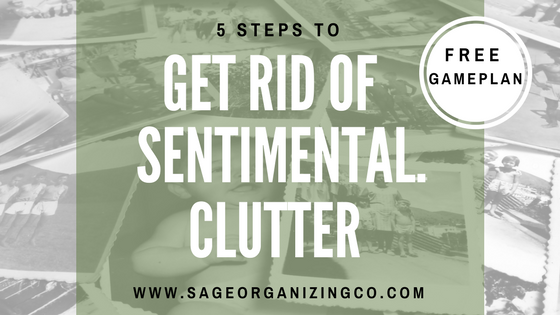
As Americans continue to live in larger and larger homes, we find ourselves able to store a huge amount of sentimental clutter...and we do not get rid of it. Ever.
As an Estate Clearing Professional and Professional Organizer, I see entire rooms, closets, attics, garages, and even cars overflowing with things people can't get rid of for sentimental reasons. People are using their homes as storage facilities instead of places to actively live their lives. In this post I'll be sharing some of my professional tips to help you get rid of some (but not all) of your sentimental clutter.
Ready to get rid of some of your sentimental clutter? Keep Reading…
#1 Mentally Prepare
|



|
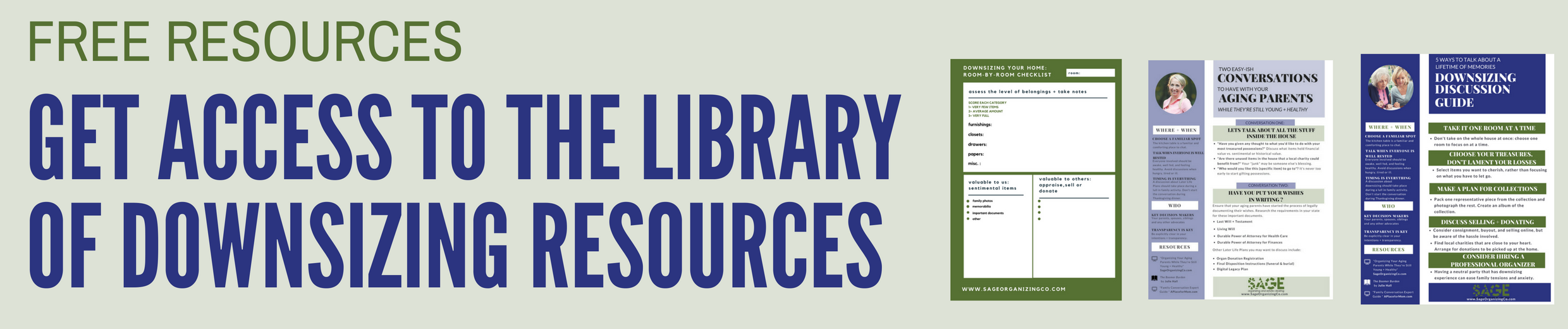
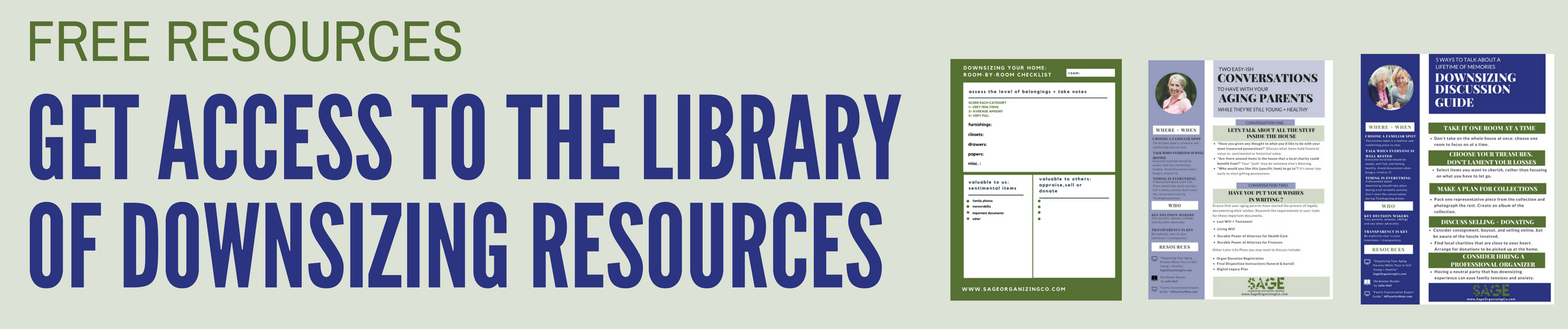
To get you started on your decluttering journey, we're sharing this Declutter + Downsize Sentimental Items Game Plan. Enjoy...and Good Luck!
|
Related Articles
with free Declutter +Downsize Family Heirlooms Game Plan
Help Organize Your Aging Parents (While They are Young + Healthy)
with free printable: Two Easy-ish Conversations to Have with Your Aging Parents
Mentally Prepare for Downsizing Your Home: 4 Tips to Control Your Emotions
with free Downsizing Your Home Emotional Roadmap
Mom, We Have to Talk: 5 Ways to Discuss Downsizing with your Aging Parents
with free Discussion Cheat Sheet
Assess the Mess: How to Plan Out Downsizing a Home
includes free Room-by-Room Checklist
Categories
All
Back To Schoool
Before & After
Closet Organization Ideas + Hacks
Decluttering Your Home
Downsizing Your Home
Estate Clearing
Family Heirlooms
Family Schedule Logistics
Free Download
Garage DIY Organization
Garage Mudroom
Grocery Planning
Holiday Organizing
Home Organizing
Later Life Planning
Meal Planning
Mental Health
Moving
Organizing Aging Parents
Organizing Products
Selling Offline
Selling Your Stuff
Sentimental Items
Weekly Family Routine
Looking for something?
Archives
August 2026
December 2024
November 2023
October 2023
September 2023
April 2021
March 2021
February 2021
January 2021
December 2020
November 2020
October 2020
September 2020
August 2020
July 2020
June 2020
May 2020
April 2020
March 2020
February 2020
January 2020
December 2019
November 2019
October 2019
September 2019
May 2019
April 2019
March 2019
November 2018
October 2018
September 2018
July 2018
June 2018
May 2018
April 2018
March 2018
February 2018
January 2018
December 2017
November 2017
October 2017
September 2017
August 2017
June 2017
May 2017
April 2017
March 2017

